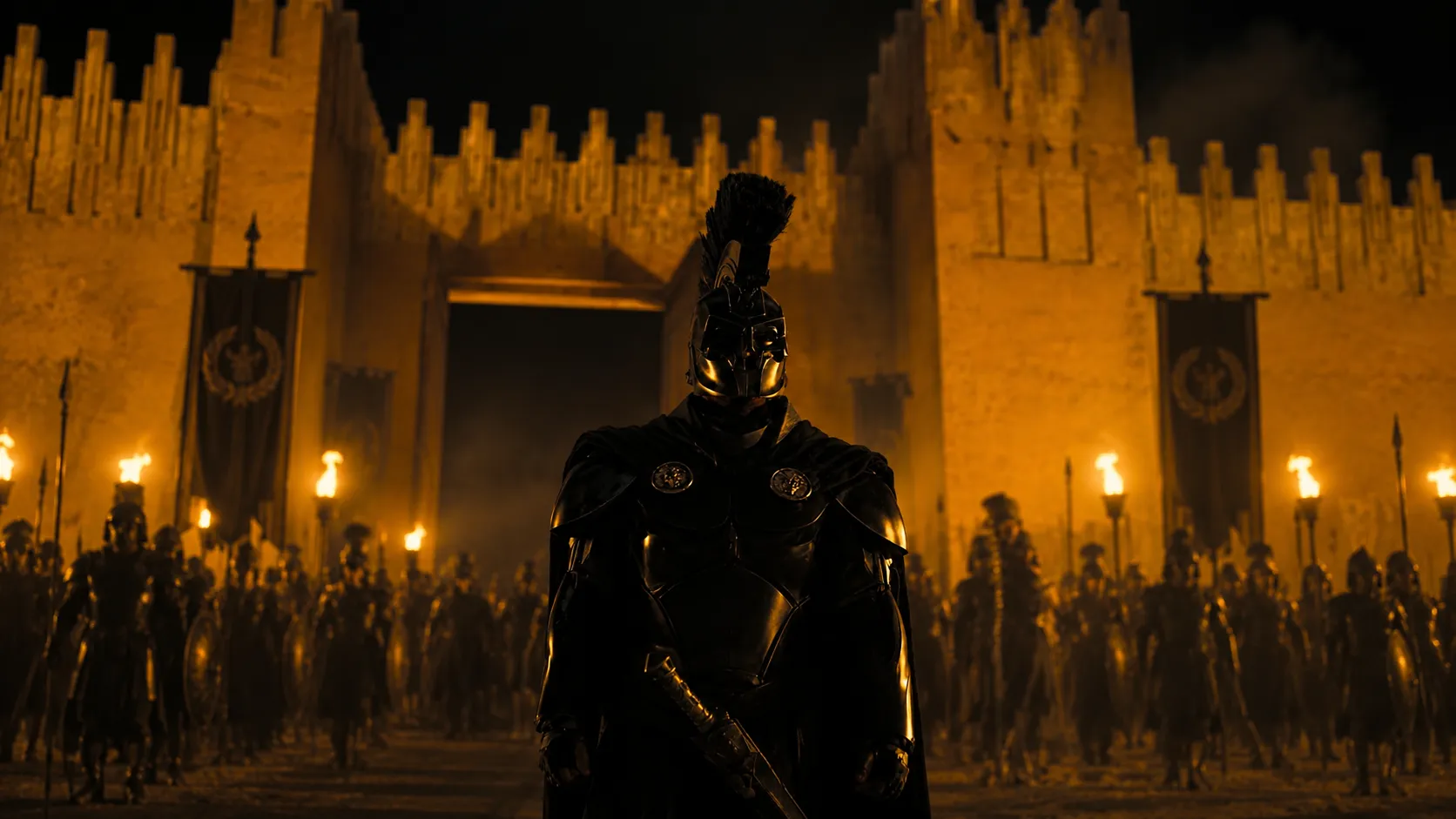
The Siege
Ten Years at Troy
The Trojan War was not a swift campaign. It was a decade of blood, politics, divine intervention, and human endurance. Here is how it unfolded under Agamemnon's command.
Year 1
The Landing
The Achaean fleet reached the shores of Troy. A prophecy declared the first Greek to touch Trojan soil would die — Protesilaus leaped from his ship regardless and was struck down by Hector. The war had its first martyr. The Greeks established their camp on the beach and began the siege.
Years 2–4
The Raids
Troy's walls — built by Poseidon and Apollo — proved impenetrable by direct assault. The war shifted to attrition. Achilles led raids on surrounding cities, plundering twelve cities by sea and eleven by land, bringing back treasure and captives to sustain the Greek army.
Years 5–8
The Long Grind
Morale wavered. Soldiers far from home, years stretching into an eternity of skirmishes and stalemates. Agamemnon held the alliance together through force of will, political maneuvering, and the promise that Troy would eventually fall. It was leadership through endurance.
Year 9
The Wrath of Achilles
The event that nearly destroyed the Greek cause. When Agamemnon was forced to return Chryseis to her father (a priest of Apollo who had sent a plague on the camp), he demanded Achilles' war prize Briseis as compensation. Achilles, dishonored, withdrew from battle entirely. Without him, the Trojans pushed the Greeks back to their ships. Hector nearly burned the fleet. Only Patroclus' death — and Achilles' devastating return — turned the tide.
Year 10
The Fall of Troy
Achilles killed Hector but fell to Paris' arrow guided by Apollo. Ajax and Odysseus fought over Achilles' armor — Ajax lost and took his own life. Finally, Odysseus conceived the stratagem of the wooden horse. The Greeks feigned retreat, leaving behind the great hollow structure. The Trojans, believing it a sacred offering, wheeled it through their gates. That night, Greek warriors emerged from inside. The gates were opened. Troy burned.
“Agamemnon stood in the ashes of Priam's palace. Troy was his. But victory, he would learn, was not the same as peace.”