The Legacy
Eternal in Memory
In Literature
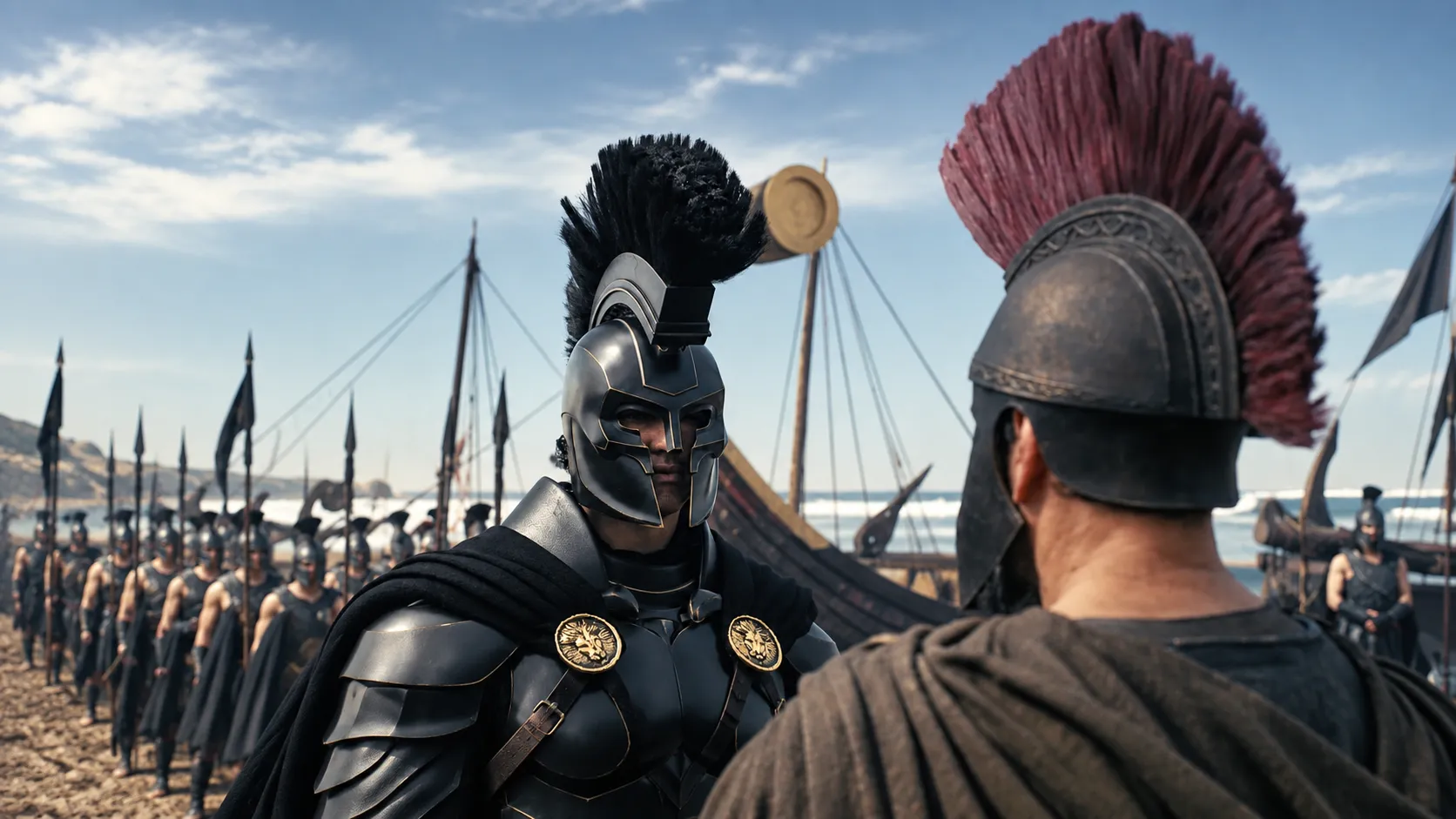
Agamemnon appears in the two foundational texts of Western literature. In Homer's Iliad, he is the flawed commander whose pride causes a catastrophic rift with Achilles. In the Odyssey, his ghost warns Odysseus from the underworld about the dangers of trusting too deeply, even those closest to you.
Aeschylus immortalized his death in the Oresteia trilogy — perhaps the greatest work of ancient Greek drama. The first play, Agamemnon, portrays his murder with unflinching intensity. The trilogy explores justice, vengeance, and the birth of democratic law through the lens of his family's destruction.
The Mask of Agamemnon
In 1876, Heinrich Schliemann excavated the ancient citadel of Mycenae and discovered a gold funeral mask in one of the shaft graves. He reportedly telegraphed the King of Greece: “I have gazed upon the face of Agamemnon.”
Modern archaeology dates the mask to roughly 1550 BCE — centuries before the traditional date of the Trojan War. It almost certainly does not depict Agamemnon. Yet the name stuck, and the “Mask of Agamemnon” remains one of the most famous archaeological artifacts in history, housed in the National Archaeological Museum of Athens.
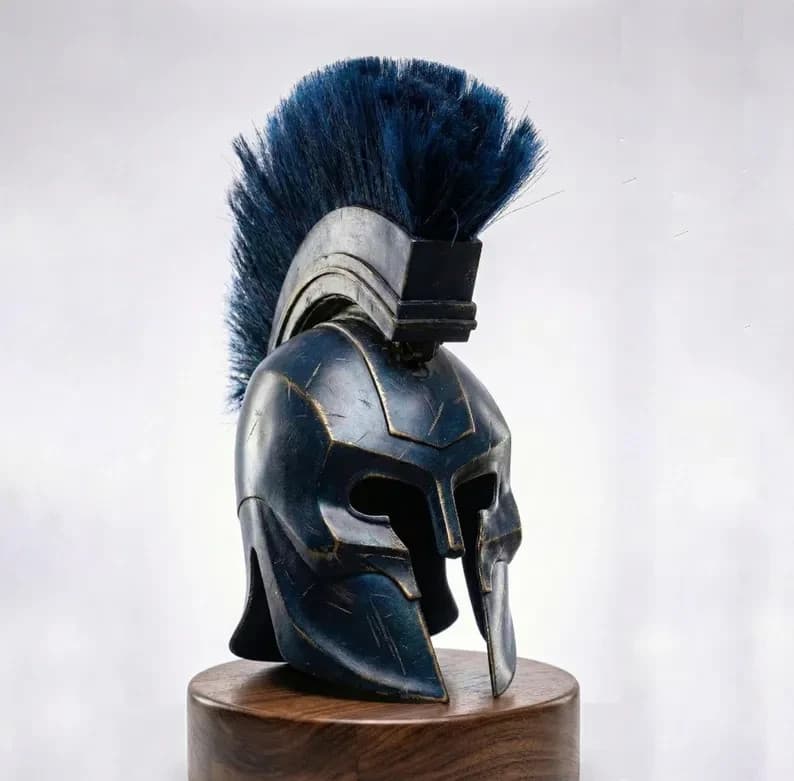
A Corinthian helmet — symbol of the warrior age
What He Represents
Agamemnon is not a hero in the modern sense. He is not admirable in the way Achilles is brave or Odysseus is clever. He is something more complex — a man who embodies the terrible cost of leadership.
Power
He commanded the greatest alliance in the ancient world. But power demanded sacrifices no father should make.
Hubris
He walked on purple tapestries meant for gods. He took Achilles' prize. He believed victory made him invincible.
Duty
He chose the mission over his daughter, the army over his family, the crown over his humanity.
Tragedy
He conquered Troy and was murdered in his bathtub. The greatest king of Greece, undone by the consequences of his own choices.
“Three thousand years later, we still speak his name. Not because he was good — but because he was unforgettable.”